
Biological contaminants are one of the most common — and often overlooked — contributors to indoor air quality issues.
- Mold and mildew
- Bacteria
- Dust mites
- Pet dander
- Pollen
- Insect and rodent debris
- Water-damaged materials
- HVAC systems and ductwork
- Condensation and humidity
- Bathrooms and kitchens
- Dust reservoirs (carpets, upholstery)
- Pest activity
Moisture is what allows biological contaminants to grow, amplify, and spread throughout the environment.
- Airflow and HVAC distribution
- Settled dust and particulates
- Surface disturbance and re-aerosolization
- Source control first — address moisture and damaged materials
- Manage humidity — keep within 30–50%
- Ventilation and filtration — improve air exchange and system performance
- Known or suspected water damage
- Persistent indoor symptoms
- Musty odors or elevated humidity
- Failed or incomplete remediation
VITAL ENVIRONMENTS™
Environmental Governance & Exposure Reduction Standards
ActinoBacteria Environmental Reservoir Governance Framework
Environmental Context
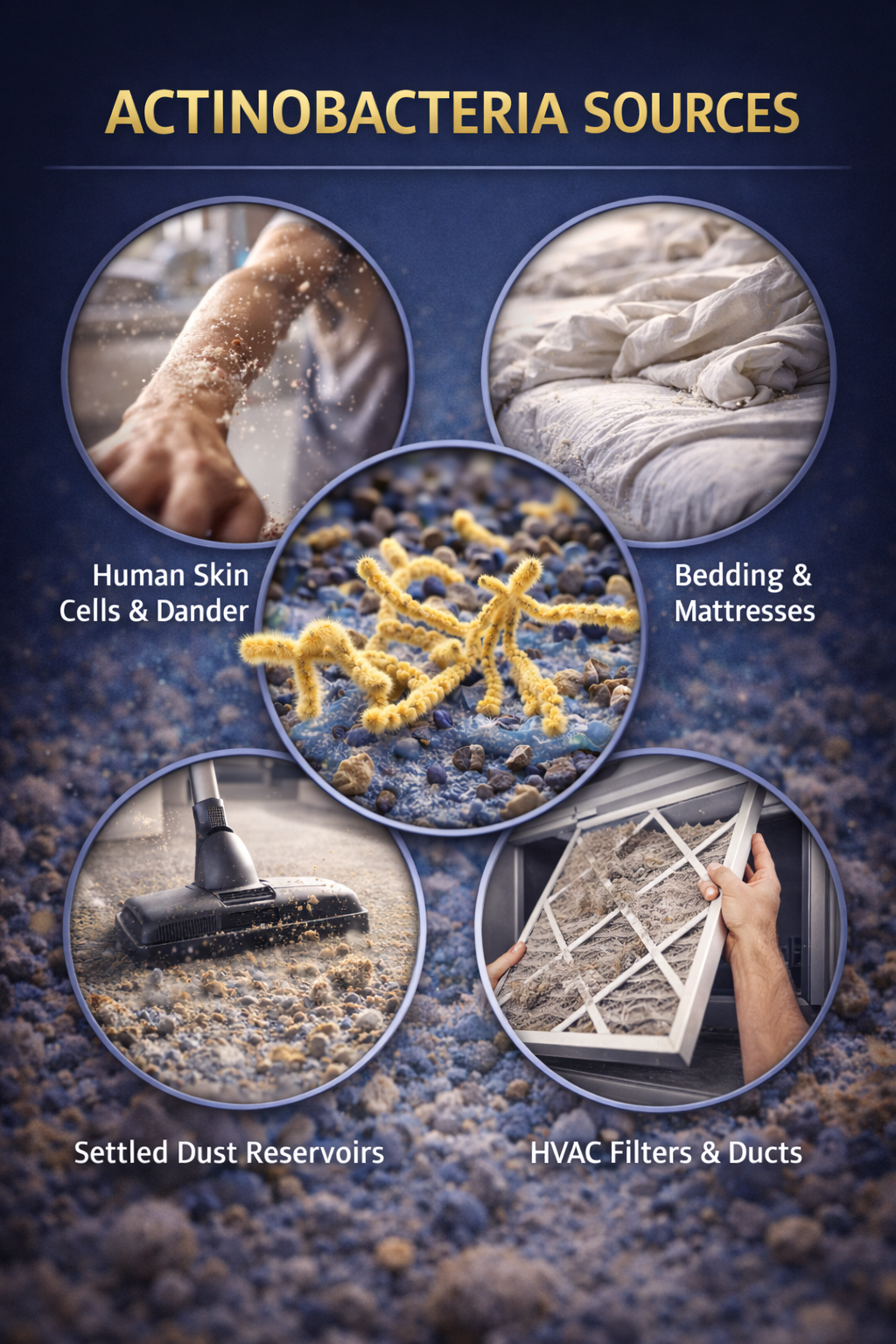
ActinoBacteria (Actinomycetes) are commonly associated with human skin microbiota and indoor dust reservoirs. Elevated signatures may reflect biological loading, persistent skin-cell reservoirs, filtration inefficiencies, or inadequate fine particulate management.
Environmental Loading Guidance
- <10,000 Bact Eq per mg of dust generally consistent with controlled indoor conditions
- Elevated values may indicate reservoir persistence or filtration bypass
- Governance focuses on load reduction — not microbial eradication
Endotoxin Environmental Reservoir Governance Framework

Environmental Context
Endotoxins (LPS components of Gram-negative bacteria) are biologically active particulate contaminants that may contribute to inflammatory stress when present in elevated dust reservoirs.
Environmental Loading Guidance
- >200 EU per mg may warrant intervention-level consideration
- Health-sensitive stabilization targets may aim for ≤100 EU per mg
- Interpretation is structural and exposure-based — not diagnostic
Mycotoxin Environmental Reservoir Governance Framework

Environmental Context
Mycotoxins are secondary metabolites produced by certain species of mold under moisture stress or prolonged growth conditions. They are chemical compounds — not living organisms — and may persist in dust reservoirs even after visible mold growth has been removed.
Primary Indoor Reservoir Categories
- Water-damaged building materials (drywall, wood, insulation)
- HVAC & hidden amplification zones
- Settled dust reservoirs
- Contaminated agricultural or food materials
Exposure Pathway Considerations
- Source correction and moisture stabilization
- Removal of contaminated porous materials when indicated
- Structured Surface Particulate Reduction (SSPR)
- Sealed HEPA vacuuming and damp wiping protocols
- Layered air purification integration
Small Particle Cleaning (SPC)

SPC is a structured post-remediation particulate load reduction protocol designed to reduce residual dust-bound microbial fragments, endotoxins, actinobacteria fragments, and ultrafine debris from indoor environments.
Structured Weekly Particulate Load Management (EPM-1)
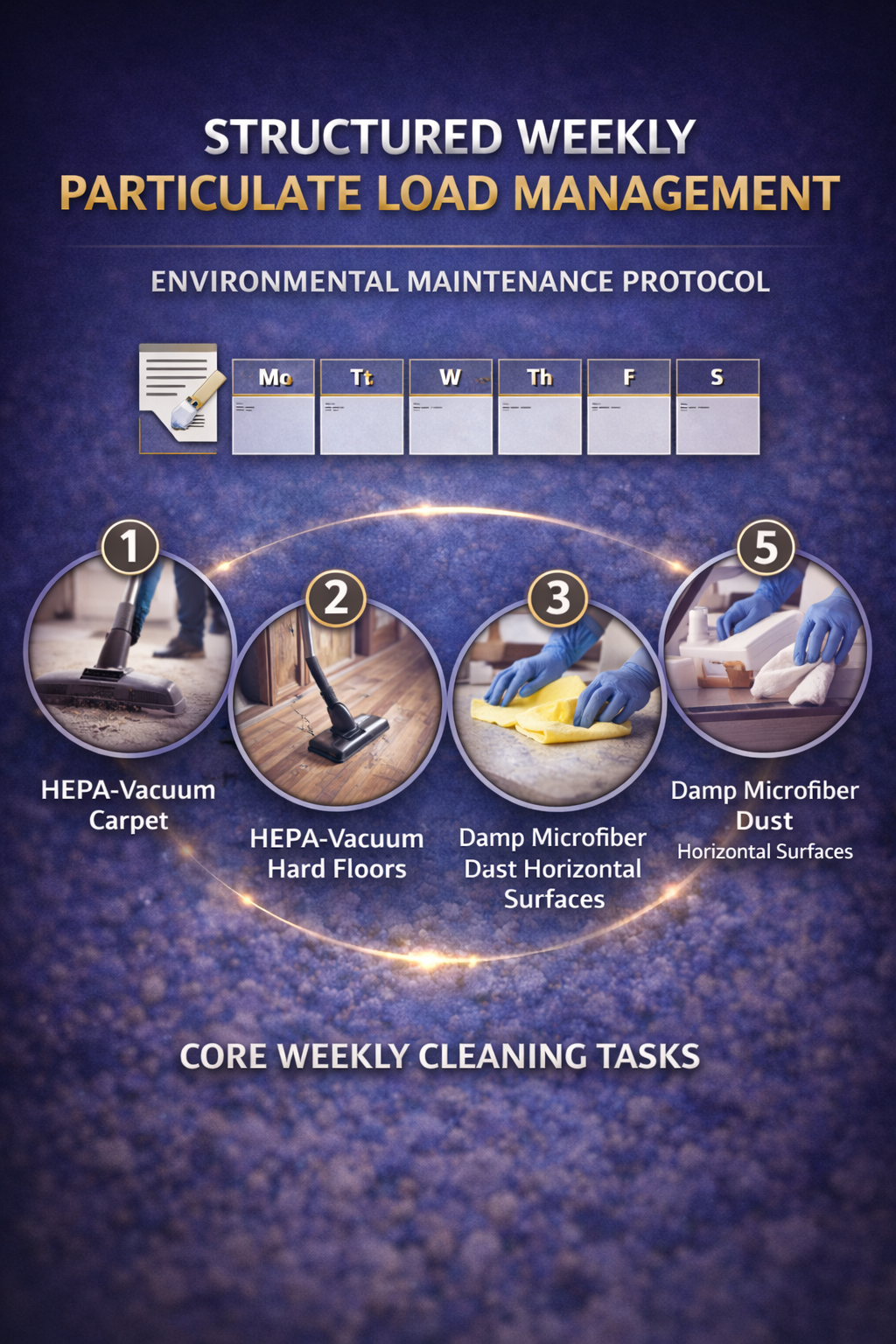
Weekly environmental maintenance preserves exposure reduction gains through sealed HEPA vacuuming, damp microfiber wiping, cross-contamination control, and mechanical removal over chemical saturation.